
Most exterior wood baluster failures can be traced back to one decision made early in the project: species selection. The wrong wood can look fine leaving the shop, but look like a callback later.
This guide breaks down which species hold up outdoors, which ones don’t, and the specific reasons why. After reading, you’ll be able to spec with confidence or have an informed conversation with whoever is specifying for you.
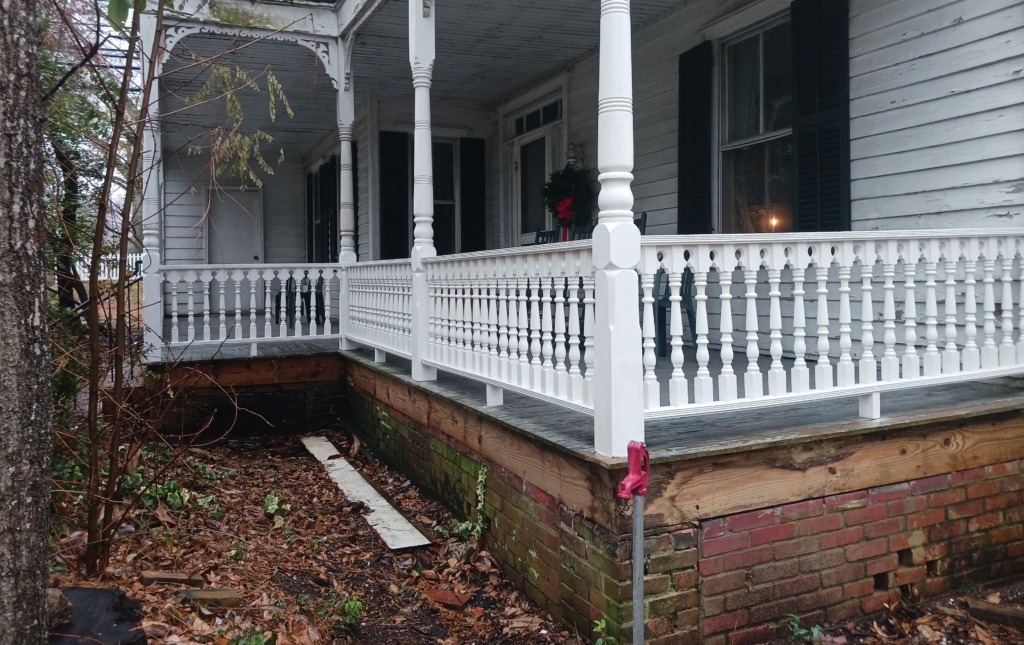
Paint-Grade Exterior Porch Balusters Installed on Traditional Porch
Paint-grade exterior porch balusters installed on a classic residential porch railing.
Why Exterior Is a Different Problem
Wood behaves differently outdoors than it does inside a climate-controlled home. Understanding the ways it can fail is more useful than a simple “best woods” list.
End grain exposure. The bottoms of balusters are almost always exposed end grain, and end grain absorbs moisture at a higher rate than face or edge grain. Regardless of the species you’re working with, unaddressed end grain is the number one reason exterior balusters can rot prematurely. Choosing the right species slows this down. An end grain sealer applied before installation slows it down further.
Moisture cycling. Wood expands when it absorbs moisture and contracts as it dries. Outdoors, this happens across seasons and sometimes within a single week of heavy rain followed by dry heat. Species with poor dimensional stability can crack, split, and eventually fail at fastener points. A baluster that looks tight at installation can have visible cracking within two seasons if the species wasn’t suited for the exposure.
Finish adhesion failure. Not all wood surfaces hold paint or stain equally. Some species have natural oils or chemical properties that interfere with finish adhesion. Others absorb finish unevenly. When finish fails, moisture penetration accelerates, and the underlying degradation compounds. Choosing a species that takes and holds your intended finish is as important as choosing one that resists rot.
UV degradation. Direct sun exposure breaks down lignin, the structural binder in wood. This causes surface graying, raised grain, and hardness reduction that affects how well the surface holds any finish from there. Some species are significantly more UV-resistant than others.
Insect vulnerability. In warm, humid climates especially, species without natural insect resistance are at increased risk from termites and wood-boring beetles. This is rarely the first concern in northern climates but becomes material in coastal, southern, and humid environments.
The Species That Hold Up Outdoors
Western Red Cedar
Cedar is often the most commonly specified domestic species for exterior baluster applications. The heartwood contains natural oils that resist rot and insects without any chemical treatment. It’s dimensionally stable relative to its weight, which means it handles moisture cycling better than most softwoods. Cedar also accepts paint and stain well and is one of the easier species to finish in the field. It’s widely available and cost-effective compared to imported hardwoods.
Honest limitation: Cedar is a softwood. It dents and dings more easily than hardwoods, which matters in high-traffic applications. There’s also significant variation in heartwood and sapwood within the same board. Heartwood is tan to reddish-brown and contains the rot-resistant oils; sapwood is pale and does not. Specifying clear heart cedar for exterior applications is worth the additional cost.
Best applications: Residential decks, covered porches, moderate-exposure railings, painted or stained finishes.
Mahogany and Sapele
These two species are often discussed together because they share similar performance characteristics. Both are hardwoods with interlocked grain structure, which contributes to great dimensional stability under moisture cycling. Both carry natural resistance to rot and insects and take paint and stain with exceptional uniformity.
Sapele in particular is worth mentioning: the interlocked grain that makes it dimensionally stable can also produce a ribbon-figure pattern that’s visually striking under stain. That same interlocked grain requires attention during surface prep before painting. Proper sealing of the grain will help prevent any adhesion issues.
Honest limitation: These are often premium-priced species. For large-scale residential or commercial projects where budget is a constraint, cedar may be more practical. For period restoration, premium residential, or architectural applications where appearance is part of the spec, the cost is justified.
Best applications: Premium residential railings, period restoration where stain-grade appearance is required, architectural applications, coastal environments.
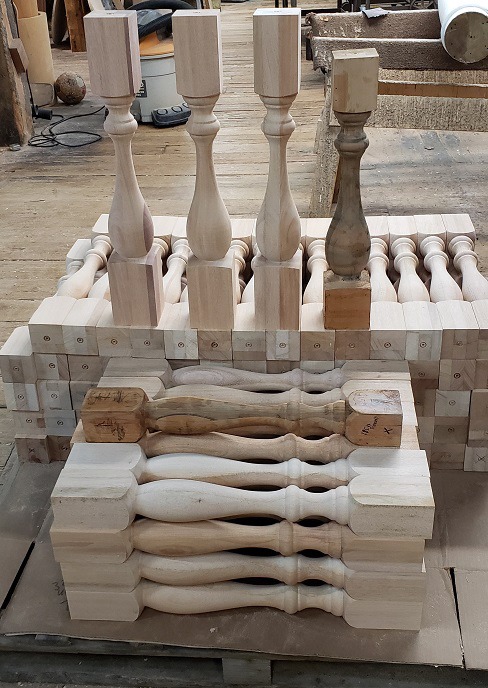
Custom Mahogany Balusters for Staircases
Bulk production of mahogany wood balusters, replicated from customer samples for a seamless fit in staircases.
White Oak
White oak has a structural property that distinguishes it from nearly every other domestic hardwood: tyloses. These are balloon-like structures that fill the wood’s pores and physically block moisture penetration. It’s the same reason white oak is used for wine and whiskey barrels.
White oak is dense, hard, and durable. It’s one of the best choices for structural exterior applications and for railings in climates with significant seasonal moisture variation or coastal exposure.
Honest limitation: White oak is heavier and harder to machine to fine turning profiles than cedar or mahogany. If the design calls for highly detailed turned profiles, confirm with your supplier that the profile is achievable in white oak before specifying it. White oak also contains tannins that can bleed through light finishes if the surface isn’t properly sealed, and the color can shift green or gray in the short term when exposed to weather before finishing.
Best applications: High-end residential, coastal and humid climates, period homes requiring stain-grade hardwood, applications for structural durability.
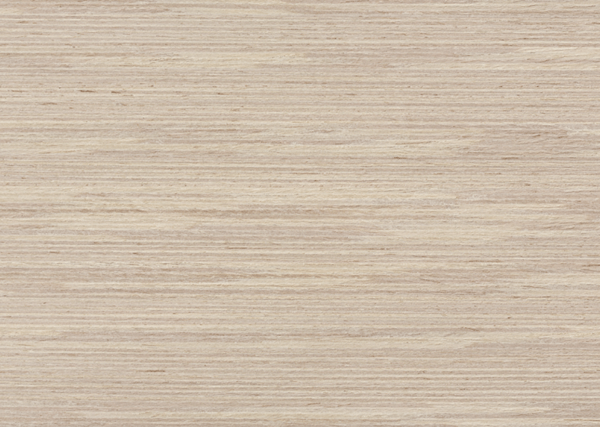
White Oak Wood Grain — Exterior Baluster Species
White oak's characteristically tight grain is the result of tyloses – pore-filling structures that physically block moisture penetration.
Teak (Reference Point)
Teak is an industry benchmark for outdoor wood performance. Its natural oils resist moisture, UV, and insects. If someone asks for “the best possible wood for exterior use,” teak is technically the correct answer.
The reason teak doesn’t appear in most project specs is cost. Teak suitable for architectural applications is significantly more expensive than any of the species above, and for most baluster applications, the performance premium over white oak or mahogany doesn’t justify the price difference.
Teak is worth knowing as a reference point, or for very high-end commercial applications where material longevity over decades is the primary specification driver.
The Species That Fail Outdoors (And Why)
Most specification mistakes come from defaulting to familiar species without thinking through outdoor performance.
Pressure-Treated Pine
Pressure-treated (PT) pine is the default exterior material for a lot of contractors. It’s cheap, rot-resistant, and it’s available at most lumber yards. For structural framing, decking substructure, and ground-contact applications, it’s often the right call.
For finished baluster profiles, it could be a problem.
The chemical treatment that makes pressure-treated pine rot-resistant also interferes significantly with paint and stain adhesion. PT pine needs to fully dry before finishing (which can take months depending on the treatment and climate). Even after drying, finish performance is inconsistent. Peeling, lifting, and uneven absorption are common outcomes when PT pine is finished too quickly or without the right primer system.
Beyond the finish issue: pressure-treated lumber is dimensionally unstable as it dries. Warping, twisting, and checking are standard outcomes, especially in turned profiles where the drying stresses concentrate differently than in flat lumber. What leaves the shop looking acceptable often arrives on-site with noticeable movement.
If a client or builder insists on PT pine for budget reasons, document the finish limitations and expected maintenance requirements in writing before the job starts.
PT pine is a reasonable default when nobody has specified otherwise. The problem is specifically in finished baluster profiles where the drying and finishing variables are harder to control.
Where PT pine does belong: Structural posts in ground contact, below-grade applications, deck framing. Not finish-grade architectural elements.
Poplar
Poplar machines cleanly, takes paint extremely well, and is cost-effective at volume. For interior staircases and railings, it’s often the right choice. Outdoors, it fails reliably.
Poplar absorbs moisture readily, swells, checks, and degrades quickly when exposed to weather without aggressive finish maintenance. The degradation timeline is specific enough to be a liability. It typically looks acceptable for one to two seasons outdoors before failure begins. That puts the callback window squarely in the range where the original contractor gets the call.
The confusion happens because poplar looks great in the shop and performs well inside. Contractors who work primarily on interior projects sometimes specify it for exterior jobs.
Do not specify poplar for any exterior application. There are no conditions under which it’s the right choice outdoors.
Soft Maple
Soft maple performs similarly to poplar outdoors and should be avoided for the same reasons. It’s an excellent interior species with poor moisture resistance. In humid climates, soft maple is susceptible to fungal staining and surface degradation.
There’s also an additional specification risk: soft maple is sometimes confused with hard maple. Neither is appropriate for exterior use, but soft maple in particular has performance characteristics closer to poplar than to a true outdoor-rated hardwood.
Pine (Untreated)
Untreated pine is readily available, but outdoors without treatment, it degrades quickly and is prone to checking and splitting as it cycles through wet and dry conditions. It also has poor natural insect resistance and fast rot development in any area with moisture accumulation.
Its maintenance cost and replacement timeline make it more expensive than cedar over a five-year horizon.
What to Specify Beyond Species
Choosing the right species is the most important decision, but it’s not the only decision. These specification details matter and are worth covering before the order is placed.
End grain sealing. Regardless of species, seal exposed end grain before installation. A quality sealer applied to both the top and bottom cuts of each baluster is the single most effective maintenance step available. Most callbacks on exterior balusters that used appropriate species can be traced to unaddressed end grain. This should be stressed in every exterior railing specification.
Profile complexity and species pairing. Highly detailed turning profiles with tight coves and beads require species that machine cleanly. Cedar and mahogany handle complex profiles well, but white oak is harder to machine to fine detail. If the design calls for intricate profile work, confirm with your supplier before committing white oak to a demanding turning spec.
Finish system compatibility. Water-based and oil-based finish systems perform differently across species. Cedar and mahogany are compatible with most exterior finish systems. White oak and teak benefit from oil-based primers given their natural oils and tannin content. Confirm the finish system with the painting contractor before finalizing the species selection.
Profile consistency for long runs. Railing systems that span significant lengths need balusters with consistent tolerances. This is a supplier quality question, not purely a species question, but it’s worth raising when ordering exterior balusters for any project longer than a single stair flight.
A Note for Homeowners (and the Contractors They’re Working With)
If you’ve made it this far into this guide and you’re renovating a deck, porch, or staircase, here’s what matters most for you.
You don’t need to arrive at a conversation with a supplier knowing the exact species. What helps is knowing your exposure conditions: is this a fully exposed deck railing, a covered porch, or a coastal environment? Is the finish going to be painted or stained? Do you have existing balusters you need to match?
Those three questions will get you to the right species. If you’re working with a contractor who is making the material selection, share this with them. The species decision is the most important one they’ll make for long-term performance.
For custom exterior baluster profiles in the species covered here, exterior wood balusters are available in small residential quantities and in production volumes. Give us a call or submit a form today for a free, no-obligation quote.