
Keeping a wood cutting board properly sanitized takes more than a quick rinse. For home kitchens and high-volume food service operations alike, knowing how to safely disinfect wood surfaces is a food safety essential.
Arnold Wood Turning has been supplying hardwood cutting boards and wood components for over 100 years. Here’s what actually works.
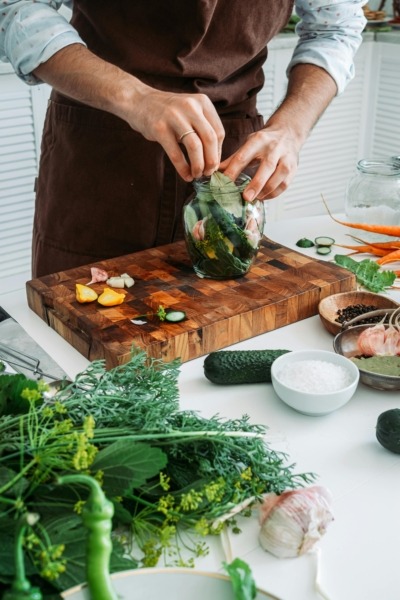
Sanitizing a Wood Cutting Board
Properly maintained wood cutting boards are safe for food prep tasks like pickling and fermenting.
Sanitize Frequently
All cutting boards should be cleaned and sanitized often, no matter the material. Below are proven techniques for keeping your boards safe and food-ready:
Hot Water and Soap
Scrub the board with hot water and soap, then rinse and dry thoroughly. Never submerge wood boards—they’ll absorb water and crack as they dry.
White Vinegar
Wipe boards with full-strength white vinegar after each use. The acetic acid kills bacteria like E. coli, Salmonella, and Staphylococcus. Ideal for people with chemical sensitivities. Keep a spray bottle of undiluted vinegar nearby.
Bleach or Vinegar Solutions
Disinfect using 1 TSP of bleach per quart of water, or a 1:5 vinegar dilution. Let the solution sit on the surface for several minutes, then rinse and dry thoroughly. Tip: Always keep boards dry between uses. Bacteria need moisture to survive. Prop one end of the board up when not in use to prevent trapped moisture underneath.

Spray Bottle for Cutting Board Sanitizing
A simple spray bottle is ideal for applying diluted vinegar or bleach solutions to cutting boards—an effective step in maintaining food safety for high-use kitchens.
Removing Odors From Wood Cutting Boards
Coarse Salt or Baking Soda
Rub with coarse salt or baking soda, let it sit, wipe clean, and rinse. Re-season afterward.
Lemon
Rub with fresh lemon juice or a halved lemon to neutralize garlic and onion smells. Rinse and re-oil as needed.
Steel Scraper or Spatula
Scrape the board regularly to remove moisture buildup. Avoid steel brushes (they’ll roughen the finish!).
Re-Oiling and Reconditioning Boards
Oiling your board weekly helps seal the wood and prevents cracking. To refinish: sand evenly to remove stains or knife marks and avoid dips or high spots, then apply a food-safe mineral oil to finish.
Best Woods for Sanitary Cutting Boards
Not all wood species are equally suited for food contact surfaces. The key factor is grain structure. Tighter grain means less surface absorption, which means fewer places for bacteria and moisture to take hold.
Hardwoods like maple, walnut, and cherry are the standard for a reason. Maple is the most common choice for commercial kitchen cutting boards. It’s a species that is dense, hard-wearing, and easy to resurface. Walnut has a tighter grain with natural oils that add some moisture resistance. Cherry sits between the two in hardness and is often chosen for presentation-grade boards.
Softwoods and open-grain species like pine or oak are not suitable for food prep surfaces. They absorb moisture too readily and are difficult to sanitize consistently at depth.
If you’re sourcing cutting boards for a commercial kitchen or food service operation, material selection at the procurement stage determines how long the boards perform and how safely they can be maintained.
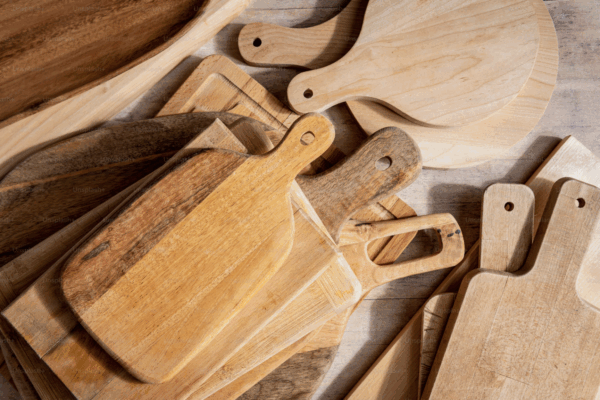
Variety of Wood Cutting Boards by Grain and Species
The best cutting boards are made from closed-grain hardwoods like maple, walnut, and cherry—ideal for resisting bacteria and moisture.
When Sanitizing Isn’t Enough: Knowing When to Replace
Even with good care, wood boards develop deep grooves that can trap bacteria. In high-volume environments, plan to replace boards on a scheduled basis for food safety.
Bulk Orders. Custom Sizes. Reliable Lead Times.
Arnold Wood Turning supplies hardwood cutting boards to commercial kitchens, food service brands, and retail suppliers. Orders are built to your spec with custom dimensions, food-safe finishing, and consistent production runs across volume orders.
If you’re responsible for sourcing cutting boards at scale, reach out for a free, no-obligation quote.