
Ash wood is a dense, shock-resistant hardwood known for its straight grain, flexibility, and ability to absorb impact without splitting. It is widely used in tool handles, wood turnings, dowels, and sports equipment, which are applications where the material has to perform under repeated stress.
This guide covers the key properties of ash wood, its most common uses, and why it remains a trusted species for both custom components and high-volume production runs.
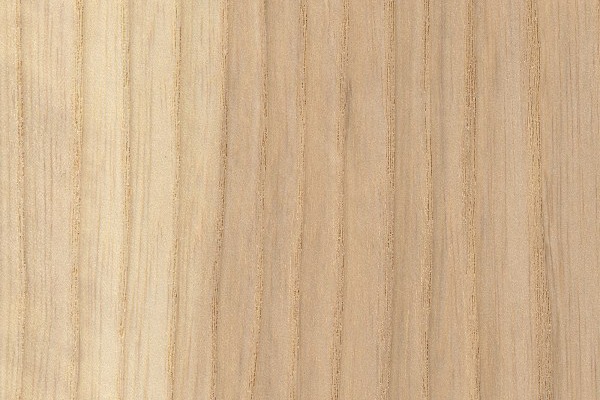
Close-Up View of Ash Wood Grain Pattern
Ash wood features a bold, straight grain pattern, making it a popular choice for various woodworking applications.
Is Ash a Hardwood?
Yes. Ash is classified as a true hardwood. American white ash in particular has a high strength-to-weight ratio and excellent shock resistance. These are properties that make it one of the more demanding hardwoods to work with, but also one of the most reliable for applications that require durability under repeated impact.
Ash Wood Characteristics
Ash wood has a straight, uniform grain and a light color ranging from pale cream to light brown. It takes stain evenly and machines and finishes well across a range of applications.
What sets ash apart from other hardwoods is its combination of flexibility and impact resistance. It can absorb significant force without splitting or cracking, a property that makes it the preferred species for tool handles, sporting goods, and turned components. It also has a high strength-to-weight ratio, meaning it delivers durability without adding unnecessary mass.
Common Ash Wood Uses
Ash wood is widely used across manufacturing and custom woodworking. Its impact resistance and machinability make it a reliable choice across a broad range of applications:
Ash is also a primary species in several custom wood component categories. Its vibration-dampening properties make it one of the most specified woods for custom wood handles, including hammer, axe, and shovel handles. This is where shock absorption is a functional requirement, not just a material preference.
Its consistency under tooling also makes it well suited for custom wood turnings, including spindles, knobs, and stair parts. And its straight grain and dimensional stability make it a reliable option for wood dowels and dowel pins used in flag poles, ladders, and structural assemblies.
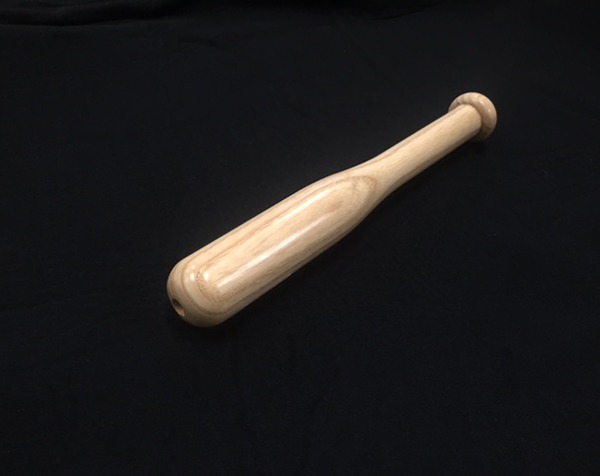
Ash Training Bat Handle – Clear Finish with Rope Holes
Custom ash training bat handle featuring a clear finish and drilled rope holes, designed for specialized training systems.
Why Ash Wood Is Trusted by Manufacturers
Ash wood is specified for applications where the material has to perform under repeated impact and stress without failing. Its combination of hardness, flexibility, and workability means it holds up in high-use environments while remaining practical to machine and finish at scale. That consistency across production runs is what makes it a reliable choice for both high-volume orders and custom component work.
Ash Wood for Custom Woodworking
Ash responds well to a wide range of stains, paints, and clear finishes, which gives woodworkers and production teams consistent control over the final appearance. Its grain structure and hardness make it particularly well suited to turning, carving, and joinery work.
Sourcing Ash Wood Components?
Arnold Wood Turning supplies ash wood components to order, including handles, dowels, and custom turned parts. Whether you need standard dimensions or a custom spec, reach out for a free, no-obligation quote.