
A church altar rail is built to be seen. It sits at the front of the sanctuary in full view of every pew. When the design of the rail calls for large poplar spindles like the ones on this rail, every one has to follow the drawing and match the rest of the set.
Arnold Wood Turning supplied all 22 for an arcaded altar rail in a church in Texas. The spindles were turned to a drawing the customer sent, shipped paint grade, and were finished and installed by the church’s project team. Much like the other custom wood spindles Arnold Wood Turning supplies, this order started with the customer’s specifications rather than a catalog profile.
The Project at a Glance
The order was a single set of spindles for two sections of altar rail, one on each side of the center aisle.
Here is what the order covered:
With 4-inch ends, these spindles are heavier than a typical stair baluster. For railings that need this kind of presence, Arnold Wood Turning supplies large diameter wood balusters in a range of species and profiles.
Why Poplar for Interior Paint-Grade Spindles
Every spindle on this rail was going to be painted, with gold detailing added afterward, which made surface quality and stability more important than grain.
Poplar as a wood species is a strong fit for that job. It has an even texture that sands smooth and takes primer and paint well, without the open grain that can show through a painted finish on species like oak. It is also a stable hardwood indoors, where it is not exposed to the moisture swings that exterior parts face.
For a set of 22 spindles that will be painted to match, poplar keeps the material focused on what shows in the finished rail. Poplar balusters are a common choice for painted stair work for the same reason. For a look at other options, see this guide to species for painted interiors.
Working From the Customer’s Drawing
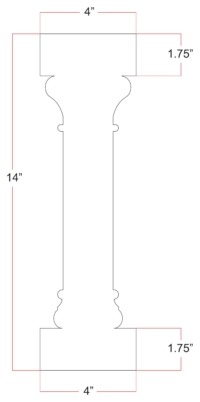
The customer sent a drawing showing the full profile: a 14-inch spindle with a 4-inch-diameter section, 1.75 inches long, at each end. Below the top section and above the bottom one, a turned cove and bead step down to a slimmer straight shaft. That drawing became the reference for the full order.
How the Spindles Fit the Altar Rail Design
The rail is built as an arcade. Each spindle stands on a square base block and carries a square block at the top, which springs arches across to the spindles on either side. The spindles act as the columns of that arcade, so their proportions set the tone of the whole rail.
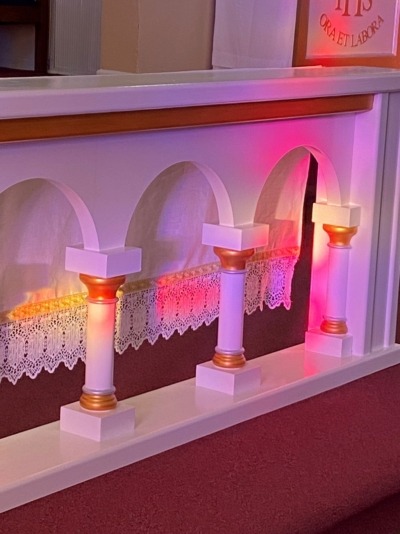
The full 4-inch ends and the turned capital and base give each spindle enough weight to balance the blocks and arches above it, while the slimmer shaft keeps the arcade open.
Arnold Wood Turning supplied the turned spindles only. The arches, base and top blocks, rail, painting, and gold detailing were completed by the church’s project team.
What the Installed Rail Looks Like
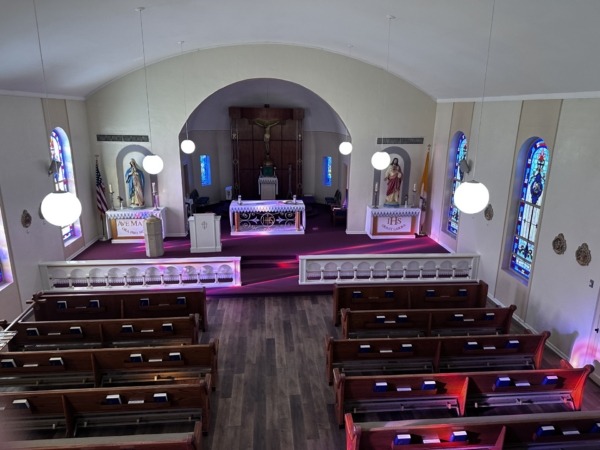
Installed, the rail runs in two sections across the front of the sanctuary and frames the center aisle. The spindles read as one matched set, and the white and gold finish ties the rail to the altar and side altars behind it.
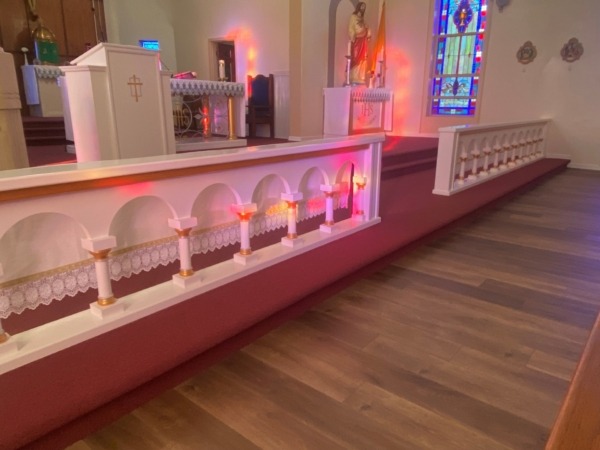
What the photos don’t show is the planning behind them: a customer drawing that set the profile, a species chosen for the finish, and a full set supplied to match.
What Large Spindle Projects Require
Large spindle projects for railings and church furnishings run into the same problems when the sourcing is not handled carefully:
Each of these can be avoided by starting with a clear drawing and working with a supplier of architectural wood turnings who works from it.
Working With Arnold Wood Turning on Large Diameter Spindles
Arnold Wood Turning supplies custom spindles and balusters for churches, homes, and commercial projects in poplar, oak, maple, mahogany, and many other species. Interior paint-grade orders like this one are common, alongside stain-grade and exterior work.
As a family-owned supplier since 1919, Arnold Wood Turning keeps one point of contact on your project from the first drawing to delivery. If your project starts with a drawing, a sample spindle, or a photo of an existing rail, we invite you to send it to us.
To get started, request a quote and include as much detail as you have. We’ll take it from there.