
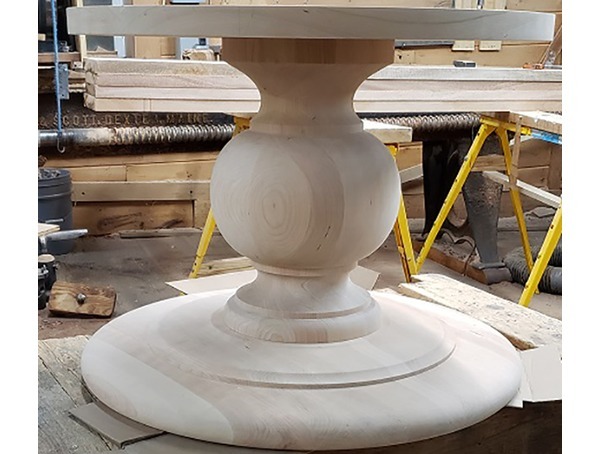
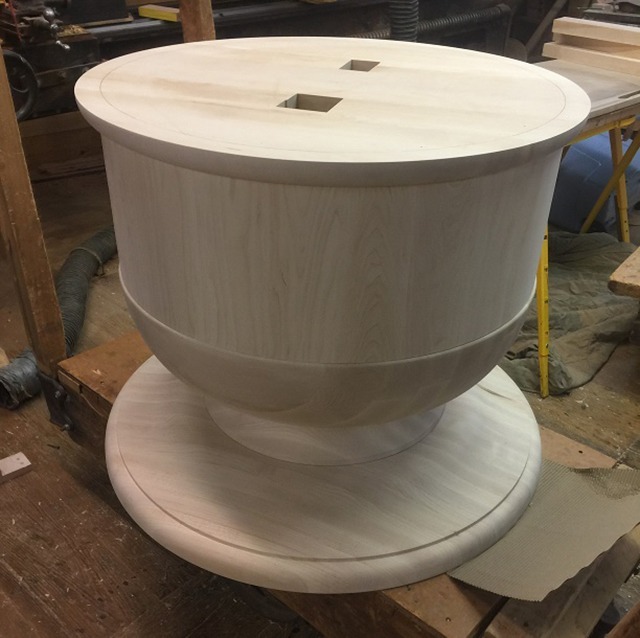
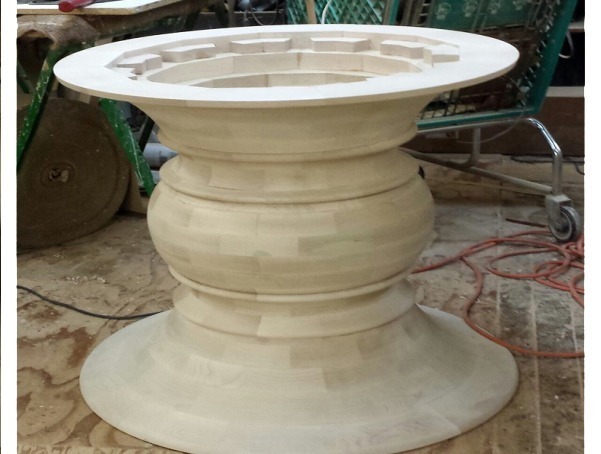
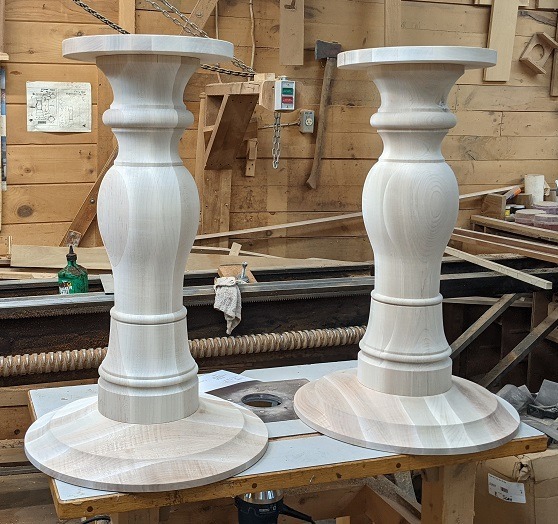
Arnold Wood Turning is a trusted supplier of custom wood table bases for dining tables, display pieces, work tables, and furniture projects of all kinds. Each base is supplied to your exact specifications, in your chosen species and profile, ready for finishing and installation.
Wood table bases are used when a piece needs both a stable footprint and a visible support that matches the design of the room. These bases are commonly used for dining tables, conference tables, display tables, and replacement furniture projects.
Using Wood Table Bases in Furniture & Interior Projects
A well-chosen wood table base helps support dining tables, display pieces, work tables, or other fixtures and keeps the scale appropriate for the space. When the base is visible from multiple sides (such as in open floor plans) it becomes a key part of how the furniture reads in the room.
In both dining and work table applications, the base diameter and the height are key for both comfort and stability. In display or statement furniture, the base influences how the piece is perceived within the space.
Cherry, mahogany, maple, oak, and poplar are commonly selected for wood table bases. Each species supports a different direction. Using the same species across bases, tops, and nearby trim can help maintain a consistent look.
Arnold Wood Turning supplies custom wood table bases for both individual furniture projects and larger production runs, in almost any species and to any size or profile you require.
If you’d like to explore related components or see examples from completed work, you can review our other architectural wood products or browse the Architectural Wood Products Gallery for additional ideas.
Share Your Project Details
If you’re planning a new table or replacing an existing table base, you can send measurements, sketches, or a description of the piece to us. After we receive your information, our team will respond with clarifying questions and an outline of possible next steps.
Additional Reading: 5 Tips for Pairing a Custom Wood Table Base With Tabletops
Common Uses for Wood Table Bases
Wood table bases are commonly used in both residential and commercial furniture applications, including:
Bulk Orders and Production Runs for Trade Professionals
Furniture makers, interior designers, and commercial buyers rely on Arnold Wood Turning when they need custom table bases in
quantity. We supply consistent profiles that are turned accurately to your exact species, dimensions, and profile requirements.
Common Options for Wood Table Bases:
Custom wood table bases can be produced in a range of sizes, profiles, and wood species to match the proportions and style of the finished table. Selection will often depend on visual preference, load requirements, and how the base integrates with the tabletop and surrounding space.